Understanding logistics and procurement is now essential for businesses that want to stay competitive. These two functions govern the flow of materials from a supplier’s dock to your facility. Yet many companies still manage them in separate teams, different software, and sometimes even different locations.
Keeping these two separate can cost a lot of money. In 2026, many things can go wrong in global markets. Ports become crowded, and fuel prices rise quickly. Because of this, it becomes clear that businesses using a connected procurement and logistics system perform much better.
When you connect these two areas, your business moves faster. You spend less money on errors. You also lose fewer orders due to shipping delays. This bolsters your company’s operational resilience.
This guide breaks down how the two functions work together and what the process looks like step by step. It explains why specialized procurement in complex industries requires integrated strategic planning to succeed in any serious supply chain operation.
What is Procurement Logistics?
Procurement Logistics is the process of managing incoming materials, starting from when a purchase order is created to when the goods reach your location.
This represents the inbound side of the supply chain. The organization must choose its suppliers and plan the transport. Let the team handle the customs work. This process makes sure the delivery reaches your warehouse and also the company’s site. The work is not only about buying items. It is to make sure they move smoothly and arrive on time. Goods must stay in good condition. Businesses can save money with this plan. It keeps your business strong, and a timely arrival of the goods and their quality helps everyone.
How Logistics in Procurement Differs from General Logistics
General logistics is a broad term. Logistics in procurement is more specific. It focuses entirely on the movement of raw materials, components, and equipment from suppliers to the buyer’s facility.
1. Inbound vs. Outbound Operations
Thinking about these two paths helps you save money. Outbound logistics handles goods leaving your facility to reach customers. Procurement logistics handles incoming goods. Both matter, but inbound logistics is where cost overruns often hide. A supplier might offer a very low price for an item. However, that low price can still cost you more money in the end. This happens when the shipping terms have hidden fees.
For example, if you bring goods through the Port of Sohar, shipments must be cleared quickly. If the paperwork is late by even one day, you have to pay a fee called demurrage. These extra charges can hit your budget hard. This is why companies are supposed to plan their shipping and buying at the same time.
2. Managing Customs and Port Fees
Planning your buying and shipping together is very important. The Bayan System is the digital platform used by the Royal Oman Police for customs. It connects all parts of the shipping process in one place. Now, this system needs the 8-digit GCC Common Customs Tariff code (set at the HS level) for every item you buy. If your procurement team uses the wrong code, your goods can get stuck at the border. By linking your buying process with your logistics, you make sure the correct codes are used from the very start. This helps keep your business running without extra fees or long delays.
If you submit a wrong or outdated HS code, the system will reject the shipment automatically. This kind of admin gap is a logistics issue, not a procurement one. But it still costs the procurement team both time and money in the same way.
Mastering the Procurement and Logistics Processes
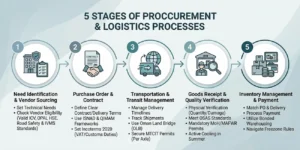
The procurement and logistics processes follow a clear sequence. Each step feeds into the next. Skipping or rushing any one of them creates problems downstream.
Step 1: Need Identification and Vendor Sourcing
When it comes to sector-specific offices logistic planning, the first phase focuses on setting clear technical needs and checking vendor eligibility. Along with quantity and quality, teams must confirm suppliers have a valid ICV (In-Country Value) certificate. This is required for tenders with major companies like PDO or OQ.
In sectors like oil, gas, and construction, sourcing also means checking OPAL (Oman Energy Association) rules. This includes Road Safety Standards and IVMS (In-Vehicle Monitoring System) approvals. Finding the right vendor that meets these rules is the first step. This makes sure the whole supply chain works well. In sectors like oil and gas, this step is tightly regulated. Construction companies must follow these rules too.
Any contractor supplying major operators like PDO or OQ must maintain a valid ICV (In-Country Value) certificate. ICV measures how much of the contract spend stays within the country. This helps local suppliers, workers, and domestic services. A vendor without a valid ICV score simply cannot participate in these tenders.
Sourcing the right vendor also means checking OPAL compliance. The Oman Energy Association sets HSE standards that include OPAL Road Safety Standards and In-Vehicle Monitoring System (IVMS) compliance. Ignoring this during vendor selection creates serious problems later.
Step 2: Purchase Order and Logistics Procurement Coordination
After choosing a qualified vendor, the next step is to set clear contract and delivery terms. For high-value government deals, this is handled through the Isnad platform. Teams must also follow the Qimam framework to measure supply value and support small businesses during the contract stage.
At this point, logistics procurement coordination begins. And the important step here for the company is to choose the right Incoterms 2020. Choosing DDP or DAP decides who pays the 5% VAT and 5% customs duty. Teams should set these terms early to avoid extra costs and keep profits safe.
For high-value government contracts, this step often runs through the Isnad platform. This is the online portal for all government contracts. Companies must also follow the Qimam framework. This system benchmarks SME performance and supply chain value.
Step 3: Transportation and Transit Management
This is where procurement logistics becomes visible. Goods are on the move. The logistics team tracks shipments. They manage carrier relationships. For those who plan logistics in oil, gas, or construction, managing delivery timelines against the purchase order schedule is critical.
Geography adds complexity here. Goods moving through the Oman Land Bridge (OLB) initiative. It bypasses the Strait of Hormuz. For sensitive inbound procurement, this route reduces geopolitical risk. It helps keep your goods safe.
Large equipment needs special care on the road. Oil rigs and big machines must have ROP Traffic Escort and Oversized Load Permits. You get these from the Ministry of Transport, Communications, and Information Technology (MTCIT). A permit is issued per vehicle axle. Without these, a shipment can be held at the border. Your organization must plan for this early.
Step 4: Goods Receipt and Quality Verification
Goods arrive. Now comes the physical verification. The warehouse team checks quantities, inspects for damage, and runs quality checks against the original purchase specs. In regulated industries, this step follows OSAS (Oman Sultanate Accreditation System) standards.
Food and medicine need extra care in the heat. These shipments must use active cooling during the hot summer months. This is from May to September, when the heat can go above 45°C. Passive cooling alone does not meet compliance standards during this period. MoH (Ministry of Health) and MAFWR (Ministry of Agriculture, Fisheries and Water Resources) permits are mandatory for these product categories, and they must be in place before goods enter the country, not after.
Step 5: Inventory Management and Payment Processing
After goods pass inspection, they are moved into inventory. The procurement team matches the purchase order with the delivery and then starts the payment process. Bonded warehousing is a useful way to manage cash for large orders. This means you store goods at a port like Sohar before paying customs duties. You only pay taxes when you decide to move the goods out of storage.
For goods entering Sohar Freezone, Salalah Freezone, or Duqm (SEZAD), special freezone rules apply. Moving goods between these zones and the Omani mainland without extra duties needs proper documents and close coordination with customs agents.
Strategic Logistics in Procurement: 2026 Best Practices
Strategy is where logistics & procurement separate good operations from great ones. The basics keep things moving. Strategy keeps costs down and relationships strong.
1. Stop Paying for Emergencies
Emergency freight is the most costly type of shipping. When a production line stops because a key part did not arrive on time, someone has to pay high airfreight charges to fix it. This cost could have been avoided.
Better logistics planning means keeping extra stock for important items, using bonded warehousing to store goods near where they are needed, and tracking shipments early through systems like the Bayan customs platform. Demurrage and detention charges at the Port of Sohar or the Port of Salalah are also hidden costs. These fees happen when a container is kept too long. Even a few extra days can increase the cost very quickly.
For industry-focused procurement solutions, spotting these cost risks before a shipment leaves is much more effective than trying to recover money after the invoice arrives.
2. Supplier Relationship Management and Freight Terms
Strong supplier relationships directly improve logistics performance. A vendor who trusts you will inform you about delays early. One who does not will only let you know when the goods fail to arrive.
Adding shipping terms in the contract gives both sides a clear roadmap. You should include Incoterms 2020 rules so everyone knows who pays for what. You should also set a payment schedule that matches delivery times. It is also wise to add penalty clauses for late shipments. These clauses define the consequences of delays, and formalizing them helps prevent future disputes.
Omanization targets add another important factor. Procurement strategies must keep the required number of Omani nationals in the workforce to maintain valid licenses. Vendors must show this compliance, and procurement teams must check it during supplier selection.
3. Digital Integration
AI-powered tracking tools now help procurement teams see shipment locations, customs status, and expected delivery times in real time. These platforms pull data from carrier APIs, port systems, and customs platforms like Bayan, and flag exceptions before they become delays.
The Logistics Professional License, mandated by the Ministry of Transport, Communications and Information Technology (MTCIT), means the people running these digital systems need to be qualified and licensed. This is not just administrative. It raises the baseline competency of the logistics workforce across the sector.
Companies work in different sectors. Digital systems link your buying data with project tools. A change in the schedule triggers a review of your buying. Everything stays updated. You do not miss any steps. This software keeps your team on the right path. It helps you save a lot of time. Your business stays organized. Everyone sees the same plan. Work moves forward faster.
The Benefits of Streamlined Logistics Procurement
What does a unified logistics & procurement function actually deliver? The results are clear and steady across industries.
1. Shorter lead times
When procurement and logistics teams share information, everything works better. Your reorder points work automatically. Shipments move without manual steps. This saves you a lot of effort. Lead times fall. They often drop by 20 to 30 percent. You get your goods faster. It stops your projects from any delays.
2, Fewer operational bottlenecks
Better planning removes gaps where goods get stuck. They often sit at ports, at customs, or at warehouse receiving areas.
3. Supply chain resilience
For construction and energy projects, where delays can halt multi-million-dollar projects, resilience is not a buzzword; it is a financial requirement. A unified function spots risks earlier and responds faster.
4. ESG compliance
Better transport routes reduce fuel use and carbon emissions. This is becoming more important for global clients and for meeting a country’s sustainability reporting rules.
5. Cost savings through combined shipments
Grouping orders from different suppliers into one shipment lowers shipping costs per unit. Bonded warehousing and freezone transfers increase these savings even more.
6. Stronger audit trail
A single system makes a clear record of every purchase. It tracks the order, the shipment, the customs forms, and the payment. This is very important for OPAL Compliance Verification Certificate (CVC) audits. It also helps with government reporting through the Qimam system.
The Future of Supply Chain Efficiency Starts With Integration
The argument for treating logistics and procurement as one function is no longer just theoretical. The compliance requirements, digital tools, and the cost pressures of 2026 have made integration a practical necessity.
In Oman, where regulatory systems like Bayan, Isnad, Qimam, and MOCIIP define how goods move and how contracts are awarded, fragmented operations carry real risk. A shipment rejected because of a wrong tariff code is a major problem. A vendor was disqualified because of a missing ICV score, or a project was rejected due to an expired OPAL CVC, which is also bad. These are all losses that can be avoided.
Delta Gulf Overseas works with multiple national companies. These companies often use complex and regulated markets. We help businesses across the wider Gulf region too. You might need a structured review for your procurement. Maybe your logistics team needs help. Our team sets up your supply chain properly. We start from the beginning of your new project. Contact us for a consultation today and let our experts help your business run better.
Frequently Asked Questions
What is the difference between logistics and procurement?
Procurement is the act of finding and buying goods. Logistics is the act of moving those goods. These two tasks meet when an order becomes a shipment. Managing them together saves alot of time and money.
Why does coordination between these two functions matter?
Bad teamwork causes late deliveries. It leads to high shipping costs and also causes stock problems. To avoid this, the team must share their data and their timelines, too. Better communication and planning help them avoid trouble and face delays.
How do Incoterms affect inbound supply chain cost?
Incoterms show who pays for shipping. They show who pays for insurance. These rules also show when the buyer takes the risk. A bad choice increases your costs. DAP and DDP are the most important terms. Companies must choose them carefully.
What role does technology play in managing the inbound supply chain?
Technology provides end-to-end visibility across the inbound journey. It helps you finish custom forms. Software warns about delays, and AI tools connect your shipping data with customs. This helps teams find issues and fix issues fast.
How can businesses reduce demurrage and detention costs at ports?
The best approach is to track your shipments. Companies must book their warehouse space early and keep their papers ready before the ship arrives. This reduces your wait time at the port. Partnering with expert clearing agents helps avoid delays and prevents extra fees from accumulating.